
BoB: Travel Planning App.
BoB is a digital travel company exploring new ways to expand its business model beyond bookings. During a three-month design sprint, I led the creation of a mobile app concept that would allow users to plan and organize trips collaboratively, while laying the foundation for future monetization through integrated travel products and experiences.
The Challenge / Problem
While BoB's existing platform helped users book travel, it lacked tools for trip planning—the most time-consuming and collaborative stage of travel.
We identified two key opportunities:
- User need: Travelers wanted an easier, more flexible way to plan trips and coordinate with others.
- Business need: BoB needed a scalable, product-driven entry point for upselling hotels, experiences, and services within the planning journey.
The challenge was to design a trip planning app that was intuitive, collaborative, and commercially extensible.
Goals / Objectives
Process
Discovery
We began by mapping the question "What makes a trip, a trip?" Interviews and competitive analysis uncovered workflows like collecting activities by day, collaborating on shared itineraries, and keeping logistics in one place. Findings clustered into themes: Plans & Activities, Trip Concepts, Collaboration Features, Social Features, and Trip Ordering.
Structure & Information Architecture
From the research insights, we defined the IA and initial user flows for creating/editing trips, adding plans, and managing collaboration. The flows had to work for solo travelers and groups, and later support monetized modules like product recommendations.
Wireframing & Prototyping
Low-fidelity wireframes in Figma (tested via scripted sessions) validated navigation patterns, collaboration features, and hierarchy across trip details versus activity lists. Moving "Add Plan" to a persistent bottom CTA increased completion rates by 27% during testing.
High-Fidelity Design & Systemization
Once validated, I defined a modular card system for plans/activities, consistent component hierarchy, and motion principles for plan creation and collaboration. These decisions seeded BoB's mobile design system.
Solution
The final concept offered simple trip creation, collaborative editing, smart grouping, and monetization-ready placeholders for future BoB offers—building a scalable foundation for a full travel planning and commerce platform.
Impact & Results
Design System
100% Adoption
Template adopted across mobile initiatives
Testing Framework
New Standard
For validating new product concepts
Product Alignment
Strengthened
Through experience-to-revenue mapping
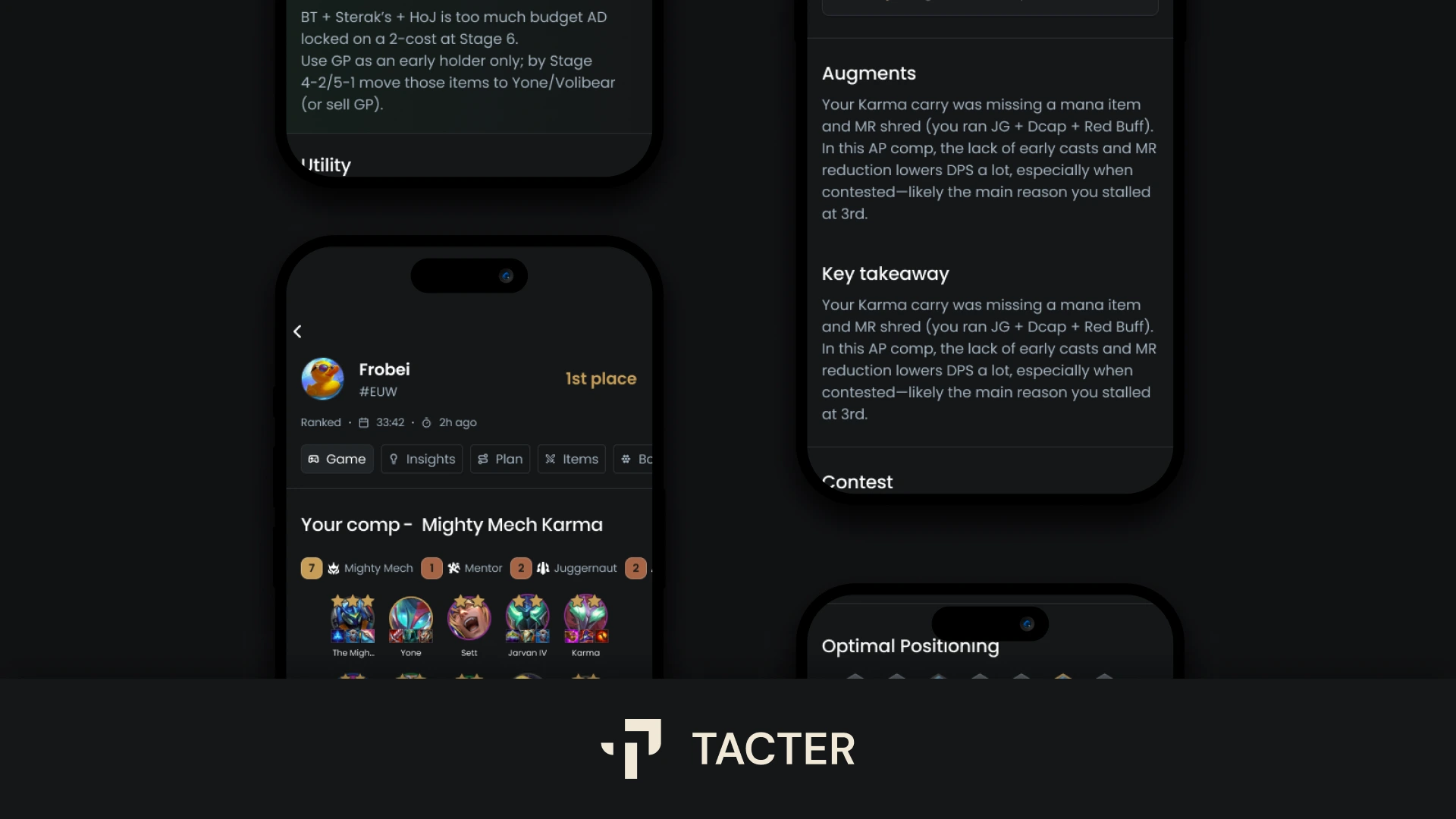

Tacter: AI Match Review
Driving activation and engagement through iteration.